
Edge Restraints: The Small Detail That Stops Your Paving Spreading
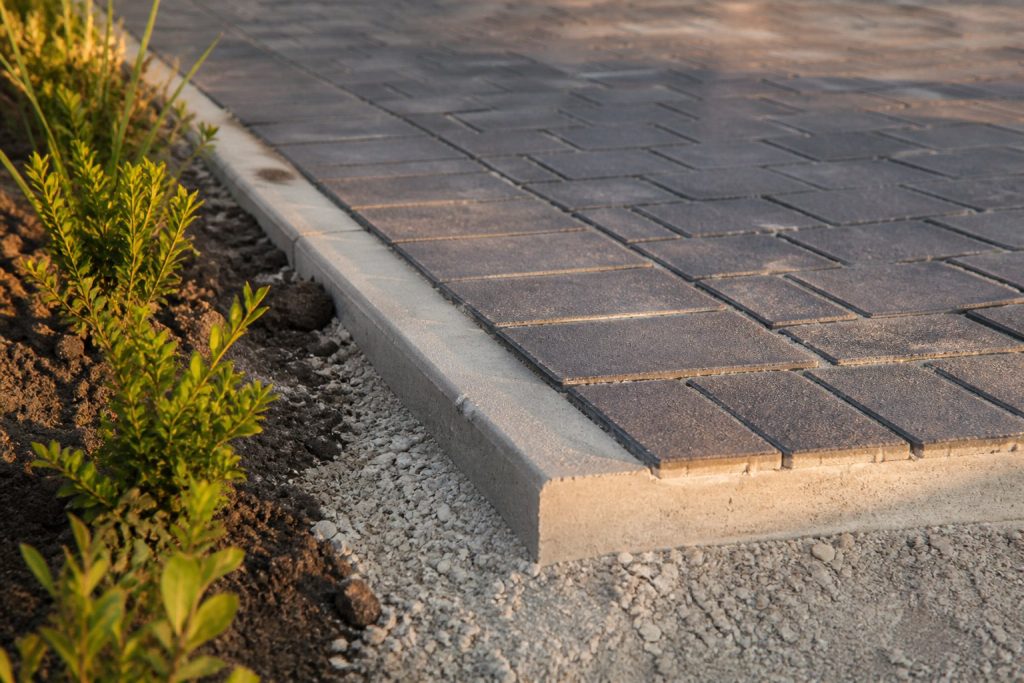
Edge restraint is the buried perimeter detail that stops interlocking paving spreading. It is the easiest line to delete from a cheap quote, and the most common cause of wavy paving three years on.
Herringbone, Stretcher or Basketweave: Paving Patterns That Hold Up Under Cars
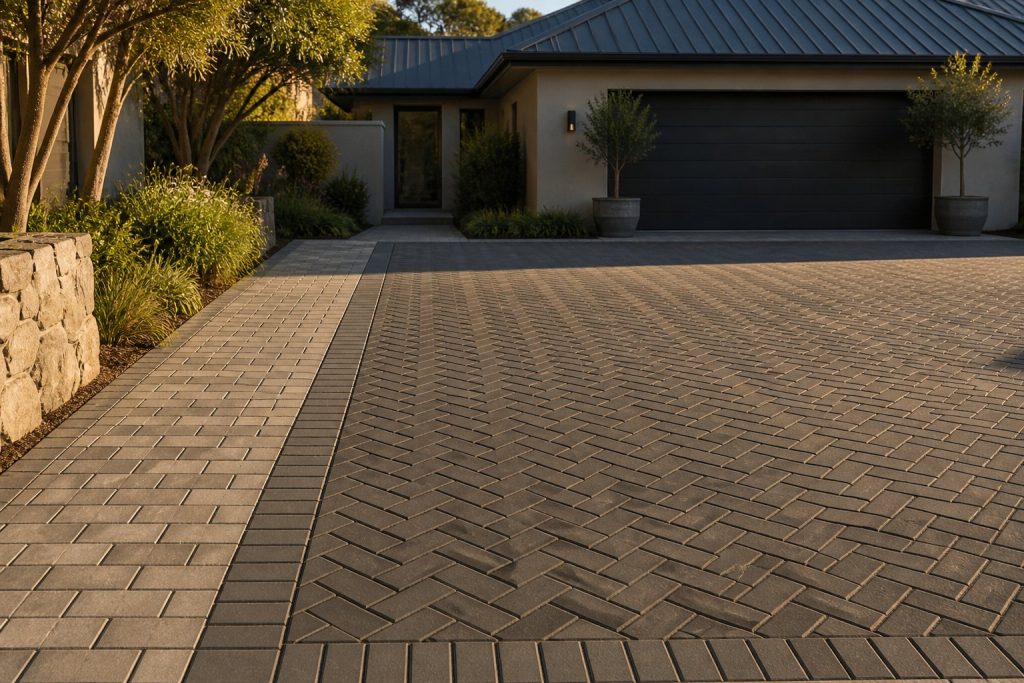
Herringbone is the only common paving pattern that locks bricks in both directions, which is why it belongs on driveways. Here is how each pattern performs, what it wastes, and where it fits.
Paving on Durbanville Clay: Heave, Drainage and How to Build For It
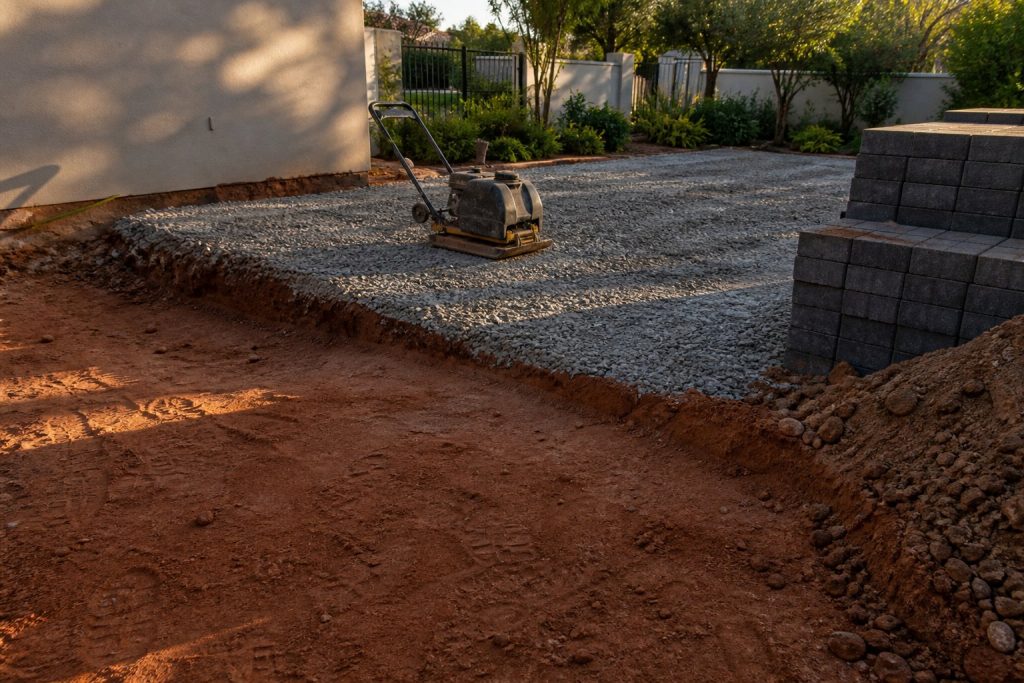
Durbanville clay swells through the Cape’s wet winter and shrinks through summer, and paving built for sand will not survive it. Here is how to test, excavate, base and drain a clay site properly.
Tree Felling Permits in Cape Town: Which Trees You Are Not Allowed to Remove

Which trees you can and cannot remove in Cape Town: protected species, heritage overlay areas, municipal street trees, and how the permit process works.
Cape Town Stormwater Rules: How Much of Your Erf Can Legally Be Hard Surface?
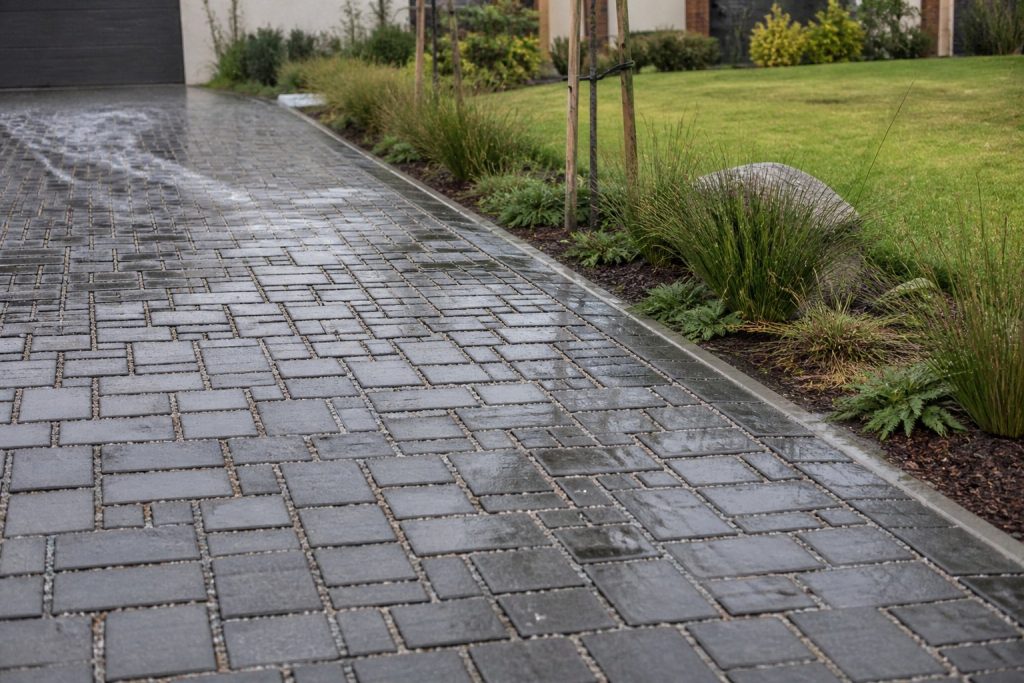
What counts towards your Cape Town erf’s hard surface coverage limit, worked examples on typical plots, and how permeable paving keeps a driveway legal.
Decking vs Paving in Cape Town: Cost, Maintenance and Which One Lasts Longer

An honest comparison of decking and paving for Cape Town conditions: lifespan, lifetime cost, wet-winter and coastal salt performance, and the situations where a deck is genuinely the better choice.
50mm, 60mm or 80mm Pavers? Choosing the Right Thickness for Cape Town Driveways
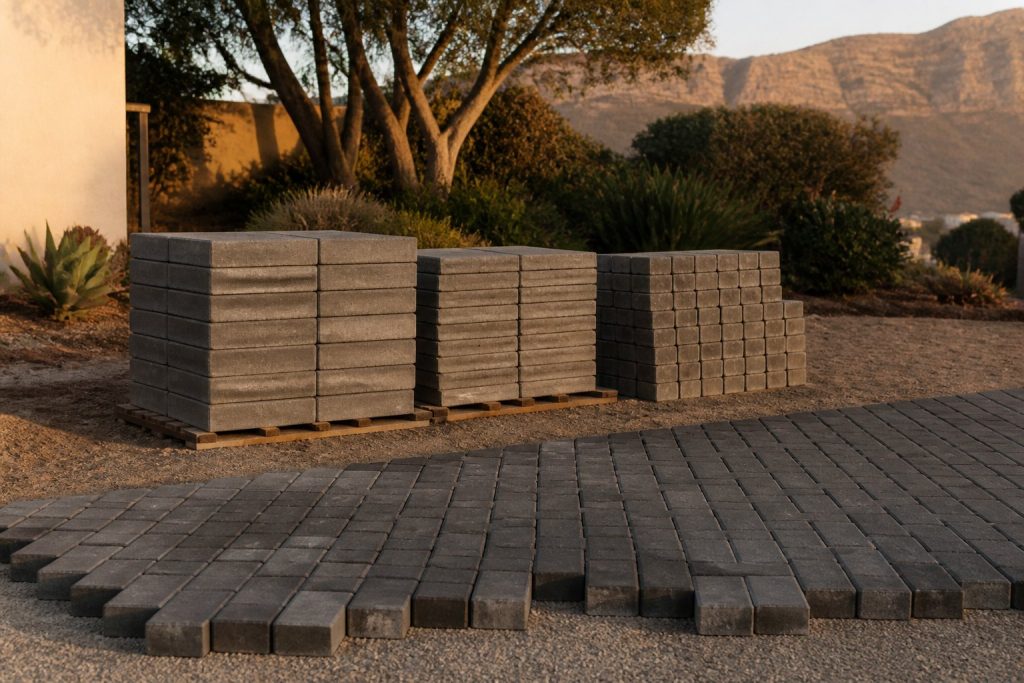
60mm is the sensible Cape Town driveway standard, 80mm is for heavy and turning loads, and 50mm belongs on patios. Here is how to pick, zone by zone.
Paving on Cape Flats Sand: Why Sandy Soil Needs a Different Base
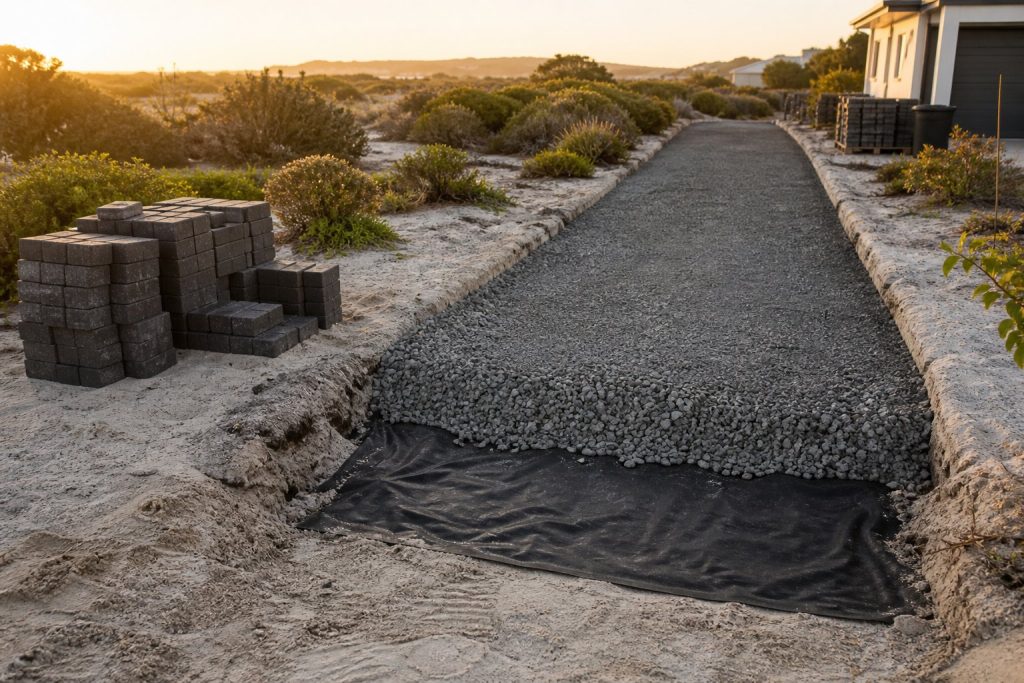
Sandy Cape Town ground swallows a thin stone layer whole. Here is how the base build-up has to change on the Cape Flats, Blouberg, Table View and Parklands.
What Is a G5 Sub-Base — and Why Paving Fails Without One
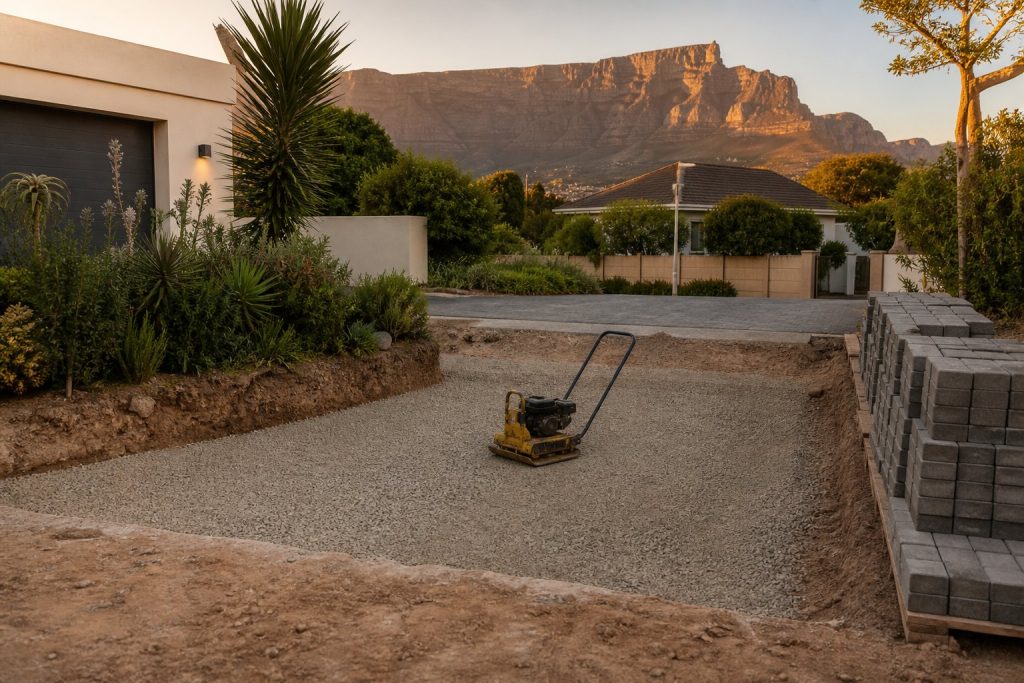
The layer under your paving is the layer that carries the load. Here is what G5 sub-base is, how deep it should go, and how to check your contractor actually built it.